SMART SEARCH
Cartilage comfort - Natural Solutions

Cartilage comfort - Natural solutions
Knee Cartilage Damage: Treatment Options
Knee cartilage starts to wear away as we get older. Knee pain and swelling symptoms develop as the cartilage cushioning begins to fail. So what happens when you have no cartilage in your knee, and what can you do about it? In this blog, we discuss treatment options for knee cartilage damage.
Causes of no cartilage in the knee
The most common cause of knee cartilage damage is osteoarthritis. Knee cartilage loss can be due to an injury to the knee, such as a ligament tear, patellar dislocation, or meniscal tear. In addition, loss of knee cartilage can be triggered by lifestyle factors such as weight gain, diabetes, and high cholesterol. Also, inflammatory arthritis conditions such as rheumatoid arthritis can further damage knee cartilage. Knee osteoarthritis is not as simple as ‘wear and tear.’
A recent study suggested that osteoarthritis should be seen as a ‘total’ failure of the joint, including the cartilage, ligaments, and synovial lining. Studies suggest that pain from knee osteoarthritis is directly related to joint inflammation, synovitis, and subchondral bone.
Symptoms of knee cartilage damage
Generally, symptoms of worsening loss of knee cartilage include pain with activity, swelling of the joint, and reduced knee joint function. Simple tasks such as walking, housework, and standing from sitting become more difficult due to pain, swelling, and restriction.
No cartilage in knee treatment
But all is not lost. A variety of treatments are used to treat cartilage loss in the knee. Generally, treatments range from simple weight loss and exercise measures to more invasive treatments such as injections or surgery. Overall, we recommend simple treatments first.
Weight loss
In general, weight gain leads to worsening symptoms and progression of osteoarthritis. Increasing weight places more pressure on the knee joints, leading to more significant knee cartilage damage. It is well known that obese people develop osteoarthritis at an earlier age and have worse pain than healthy people. Secondly, increased fat cells in the body stimulate insulin production, leading to chronic inflammation. This type of inflammation leads to more significant cartilage degradation and worsening cartilage loss in knee.
Losing weight reduces pressure on the joints and body inflammation, improving symptoms. Studies suggest that a 10% weight reduction leads to a 50% reduction in knee pain from cartilage loss—a vast improvement.
Exercise therapy
Strength training and aerobic conditioning exercises improve symptoms of cartilage loss in the knee. Symptom improvement occurs from lowering chronic inflammation in the body, weight loss, and muscle strength gain. In addition, strengthening the muscles around the knee helps offload the knee and reduce pressure on the joint. Studies suggest that a combination of gym, pilates, yoga, and Tai Chi is the most effective for improving pain and function. Also, aquatic exercises such as swimming or aqua aerobics have significantly improved pain and function.
enerally, exercise works best for the following:
- Younger patients, although older patients, still benefit.
- Knee arthritis. There are over 50 high-level studies showing exercise works in knee arthritis.
- An exercise program that follows the American College of Sports Medicine guidelines. So, a combination of aerobic, resistance training, and balance exercises will be used with the progression of strength training. Also, a supervised program with a personal trainer works best.
Are low-intensity workouts as good as high-intensity workouts for knee arthritis?
We think so. A recent study found that 20-30 minutes of exercise three times a week produced the same benefits on pain and function in knee arthritis compared to 90 minutes three times a week. However, those in the low-intensity group were likelier to stick to their exercise programme. These results suggest that an exercise program involving less time and fewer exercises can still offer benefits and may be easier for people to undertake and stick to than one involving more time and effort.
Can I run with knee arthritis?
There are no simple answers. An exercise program improves symptoms and general exercise tolerance, including running. We always tell people that running should be their goal if they enjoy it. However, depending on the pain, some people might need to reduce their running time.
The good news in this study is that running at your own pace does not worsen cartilage loss in the knee on X-ray and may improve your pain.
Also, a recent survey of marathon runners found they were not at an increased risk of knee arthritis compared to the average population.
Couch to 5km is a good start for sedentary people who want some guidance for a gradual return to running.
Supplements
There is increasing evidence that some supplements may improve knee arthritis pain:
Boswellia serrata is a herb extracted from the Indian frankincense tree. Boswellic acids inhibit the 5-lipoxygenase enzyme, which has anti-inflammatory effects. In some studies, Boswellia serrata reduces pain and stiffness in knee arthritis. We recommend 100-250mg daily for four weeks.
Curcumin is obtained from the Curcuma longa plant. It has anti-inflammatory effects through several pathways, including inhibiting inflammatory substances such as the COX-2 enzyme. Studies suggest it is effective for knee arthritis and should be taken for 12 weeks.
An offloading brace can be effective when cartilage loss in the knee is confined to only one area. These braces push the knee away from the side with no cartilage, reducing pressure and inflammation in that part of the knee. Generally, braces are OK at reducing pain and improving function in the knee. However, some people find them uncomfortable.
A new shoe insert called APOS therapy has recently gained NICE recommendations for treating severe knee arthritis. These particular shoes have unique rounded pods fitted to the undersurface of the shoe. APOS therapy reduces knee pain by changing the forces on the foot and knee and correcting abnormal walking patterns. NICE highlighted that clinical evidence from a high-quality trial improves knee pain and function compared to a sham device. The cost for the footwear and associated treatment from trained professionals is estimated at £875 per person.
NSAIDs for cartilage loss in the knee
Over-the-counter medications such as ibuprofen reduce pain associated with no cartilage. However, the effect is negligible. Generally, diclofenac or etoricoxib works best for arthritis. But, you must be aware of possible side effects such as gastritis, reduced kidney function, and increased blood pressure. Generally, those people with heart disease should avoid NSAIDs. One alternative to tablets is topical NSAID creams or ointments, which are effective in relieving the pain of hand and knee osteoarthritis. In addition, creams have significantly fewer side effects than tablets.
Cortisone injection for cartilage loss in the knee
Cortisone is a powerful anti-inflammatory drug that reduces inflammation and pain.
Studies suggest short-term and mild improvement of knee pain for up to 8 weeks. However, recent studies show that cortisone is no different from a placebo for knee arthritis at six months. Also, there is concern about repeated cortisone injections causing more knee cartilage damage. Overall, we use cortisone injections less for longstanding cartilage loss in the knee and reserve these injections only for a severely swollen knee.
Platlet - rich - plasma also known as PRP, is a concentrated source of platelets. We obtain PRP from your whole blood. Then, the blood is spun in a centrifuge, separating the plasma from the white and red cells. This plasma contains concentrated platelets, which have many growth factors. Overall, we believe PRP works by allowing the growth factors to settle chronic inflammatory cells, leading to lower pain.
Recent studies suggest that PRP or platelet-rich plasma improves knee pain for over 12 months compared to gel injections, cortisone, and other substances.
Currently, 23 randomised trials show that PRP is better for no cartilage knee than other injections such as cortisone and hyaluronic acid. Also, we think that a type of PRP called leucocyte-poor PRP (compared to leucocyte-rich) has a good effect with less risk of a flare.
Often, 2-3 injections are needed over 4-6 weeks.
Combining PRP with hyaluronic acid
Recent evidence suggests combining PRP with hyaluronic acid might be better than PRP alone. This positive effect is seen at 3, 6, and 12 months. Also, we think adding hyaluronic acid reduces the risk of a flare after a PRP injection.
When combining treatment for knee cartilage damage, we recommend one high molecular weight hyaluronic acid and 2 PRP injections.
Nstride PRP
Nstride PRP is a second-generation PRP that concentrates the platelets and white cells.
The theory is that Nstride PRP will last longer than normal PRP. Some studies suggest the pain-relieving effect can last for a few years. But how genuinely effective is Nstride PRP? It seems that the evidence is not so convincing compared to placebo. Also, Nstride contains a higher concentration of leucocytes or white cells. Higher white cells may cause a significant flare after an injection.
Arthrex ACP Max
Arthrex ACP Max is a second-generation PRP system that super concentrates platelets, producing a dose of 5-12 billion. It has an innovative dual syringe system enables a double spin and concentrates platelets. Unlike NStride, it has a low white cell count, meaning the potential flare is generally less severe.
Arthrosamid injection for damaged knee cartilage
Arthrosamid is a unique hydrogel of water molecules attached to a polyacrylamide backbone. It is injectable and non-degradable, meaning the body does not break it down.
It works by coating the lining of the synovium of the knee joint, reducing inflammation, and providing lubrication.
Recent studies show improvement in pain scores lasting for up to 4 years. In addition, compared to hyaluronic acid, it works better in younger and slimmer patients.
Comparing injectables, Durolane, PRP or Arthrosamid: Which drug is more effective?
According to studies published on each injectable for knee a
According to studies published on each injectable for knee arthritis, we think the effectiveness for the treatment of knee arthritis in percentage terms is as follows:
Durolane: 70%
PRP: 70%
Arthrosamid 75%. Patients less than 70 years old do better (80-95%)
Surgery for damaged knee cartilage: what are the options?
Surgical options for bone-on-bone cartilage loss in the knee are limited.
Firstly, keyhole surgery for knee cartilage loss is ineffective and could accelerate knee damage. Therefore, the only indication for keyhole surgery is when you have actual mechanical symptoms such as locking or giving way due to a loose body or a meniscal flap.
High tibial knee osteotomy can reduce pressure on the knee joint if there is a malalignment problem. However, the evidence for effectiveness is not strong, and the risks are real. In addition, recovery is prolonged (greater than six months), and there is currently debate about whether osteotomy is better than a knee replacement.
Finally, knee replacement surgery effectively reduces pain and improves function compared to physiotherapy. Still, the sting in the tail is that 16% of people have problems after this surgery – some of these are serious. The bottom line is that surgery should only be done once your pain and activity levels become unacceptable.
Knee cartilage repair without surgery: Is it possible?
Overall, no current non-surgical treatment will repair or regenerate cartilage in the knee. Even surgery for cartilage replacement is problematic. Injections such as PRP, hyaluronic acid, and stem cells have not demonstrated cartilage regeneration in arthritis. Procedures injecting stem cells into knee joints have not shown better results than any other injection, including a placebo.
Other commonly asked questions about knee cartilage
damage:
Will my knee arthritis get worse?
Not necessarily. Your chances of knee replacement are only 30% in your lifetime. Generally, the best way to prevent the progression of knee cartilage damage is to maintain a healthy lifestyle: exercise, lose weight, and stop smoking. If you gain weight, your chances increase from 30% to 35%.
What causes pain with knee arthritis?
Contrary to popular opinion, cartilage damage does not cause pain. Instead, pain comes from swelling of the bone under the damaged cartilage (subchondral bone) or the inflamed synovium.
Does arthroscopic surgery help knee arthritis?
No. Some studies suggest it may worsen cartilage loss in the knee. However, keyhole surgery may also contribute to mechanical symptoms such as locking or giving way due to a loose body or flap.
When to have knee surgery for arthritis?
Every person is different, but we suggest a knee replacement if you need to reduce your step count to 7000 or less daily due to pain. The good news is that most people (85%) get back to their chosen sport five months after a knee replacement. These activities include walking, skiing, and even running.
Which injection is best for knee arthritis?
Overall, we think Arthrosamid injection has a slightly better effect than other injectables, such as PRP or hyaluronic acid. Studies suggest that 73% of patients experience a meaningful reduction in knee pain and improved function compared to 60-70% who have PRP and 65-70% who have hyaluronic acid. However, Arthrosamid is considerably more expensive.
Can you combine Duoxetine with a knee joint injection for knee arthritis?
Duloxetine is an antidepressant that has been shown to work for osteoarthritis. A recent study found that combining Duxoxetine with a knee injection (cortisone and hyaluronic acid) was more effective than the injection alone. At 6 months, those patients who took Duloxetine after a knee injection did better than those who just had an injection.
Final word from sportdoctorlondon about knee cartilage damage
Loss of cartilage in the knee is expected as we age. Weight loss and exercise are the best medicines to reduce pain and improve activity. Only use injections sparingly to help with lifestyle factors, with a preference for knee gel and PRP. Avoid expensive treatments like stem cells that promise regeneration. Finally, consider a knee replacement if all other treatments fail and your ability to exercise drops.
Reference: Sport Doctor London.
Mark Hoppus has stage 4 lymphoma

Mark Hoppus has stage 4 lymphoma
Mark Hoppus is battling an aggressive form of lymphoma.
The Blink-182 star revealed last month he’s undergoing chemotherapy for cancer and he’s now shared further details about his illness, including the fact his blood is “trying to kill” him and he’s been diagnosed with a stage four form of the disease.
In a Twitch Q&A with Chilean fans, he said: “[I have] diffuse large B-cell lymphoma.
“My classification is stage IV-A, which means, as I understand it, it’s entered four parts of my body. I don’t know how exactly they determine the four part of it, but it’s entered enough parts of my body that I’m stage IV, which I think is the highest that it goes.
“So, I’m stage IV-A…The cancer isn’t bone-related, it’s blood-related. My blood’s trying to kill me.”
The ‘What’s My Age Again’ rocker has been undergoing intensive chemotherapy and has found the side effects tough.
He said: “The first chemo, I felt like I was a zombie that fell onto an electric fence and was just being shocked.
“The second round of chemo, I just felt very weak and tired. Really just like the worst flu ever. The third round of chemo, I started retching. Nauseous and that whole thing.”
Mark’s mother has battled the “exact form” of cancer he’s been diagnosed with so she’s proven to be a great source of help and support.
He said: “Oddly enough, we have the exact form of cancer.
“And she beat it, so I’ve been able to talk to her and bond with her quite a bit.”
The 49-year-old rocker has lost his hair as a result of his treatment but he’s managed to see the funny side.
He said: “I want to get the absolute worst toupee, so that it’s obviously not my hair, and just walk around and see how people look at me.”
Reference: Bang ShowBix: Bang Showbiz
Steroids are life-saving for critically ill COVID-19 patients, WHO says

Steroids are life-saving for critically ill COVID-19 patients, WHO says
There's yet more evidence that cheap, widely available steroids can help save the lives of critically ill COVID-19 patients. In a new analysis that included data from seven clinical trials, the drugs reduced the risk of death among patients by one-third, compared with patients given only standard care.There's yet more evidence that cheap, widely available steroids can help save the lives of critically ill COVID-19 patients. In a new analysis that included data from seven clinical trials, the drugs reduced the risk of death among patients by one-third, compared with patients given only standard care.
Based on the analysis, the World Health Organization (WHO) updated its treatment guidelines for corticosteroids, recommending that those with a severe COVID-19 infection receive the drugs for seven to 10 days as their new standard of care. Those with mild infections shouldn't get steroids because "current data indicated they would not likely derive benefit and may derive harm" from taking the drugs, the guidelines state.
The new analysis was published Sep. 2 in the Journal of the American Medical Association (JAMA).Early on, there were hints that steroids could be life-saving for COVID-19 patients. For instance, data from China, published in March in JAMA Internal Medicine, suggested that corticosteroids could reduce deaths among coronavirus patients with "acute respiratory distress syndrome" (ARDS) — a condition where the lungs become severely inflamed and their air sacs fill with pus.
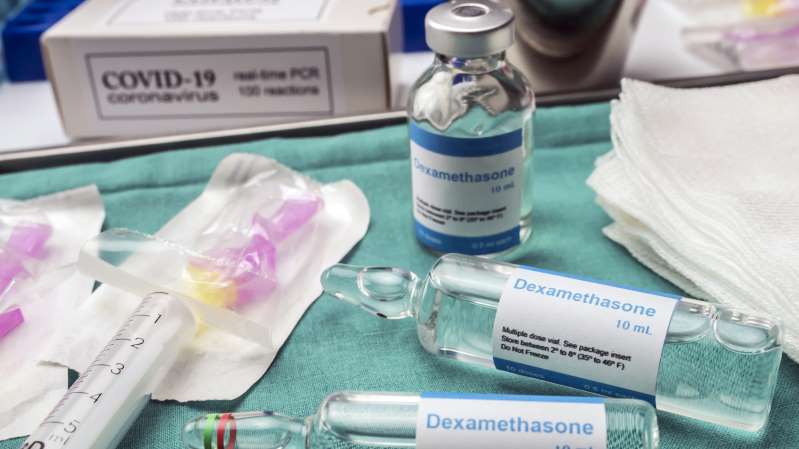
In June, U.K. researchers reported that a steroid called dexamethasone reduced the death rate among COVID-19 patients who required oxygen, either through ventilation or less-invasive methods, Live Science previously reported.
But that research had not yet been peer reviewed.
"Without access to full trial details, clinicians were uncertain whether to begin using dexamethasone in patients hospitalized with COVID-19, and if they used it, how they should implement it in practice," professors of medicine Hallie Prescott and Todd Rice wrote in an editorial about the new analysis, also published today in JAMA.
That said, "there has been widespread adoption of steroids in the care of critically ill patients with COVID-19" since the U.K. report came out, Dr. Nahid Bhadelia, medical director of the Special Pathogens Unit at the Boston University School of Medicine, told Stat News. "This is particularly true in many resource-limited countries where I work," she noted, given that dexamethasone is cheap and easy to get.
Dexamethasone works by suppressing the immune system and reducing inflammation in the body, and is commonly prescribed for psoriasis, rheumatoid arthritis, asthma and some cancers, such as leukemia, Live Science previously reported. In the new analysis, the researchers looked at trials that tested either dexamethasone or one of two other steroids, hydrocortisone and methylprednisolone.
All the drugs similarly dampen the immune response, cause blood vessels to constrict and help to reduce fibrosis, or the development of thick scar tissue, according to the JAMA editorial.
According to the analysis, all three steroids reduced patient mortality at similar rates; overall, the authors calculated a 34% reduction in the risk of death among critically ill patients given steroids compared with those given standard care, Stat News reported. Overall, only 18% of those taking steroids reported serious side effects, compared with 23% of those given standard care; within individual trials, these relative rates differed, but in most of the studies, steroids weren't associated with a higher risk of side effects.
The new analysis should dispel any remaining doubts about administering steroids to critical COVID-19 patients, Dr. Todd Rice, an associate professor of medicine and critical care physician at Vanderbilt University School of Medicine, told The New York Times. Previous studies of the coronaviruses SARS-CoV and MERS-CoV suggested that steroids might hobble the immune system as it attempts to fight off the pathogens, but that doesn't seem to be a big concern here, according to the JAMA editorial.
The benefits of steroids outweigh the risks to critical COVID-19 patients, although "the exact threshold at which an individual patient should be prescribed corticosteroids remains unclear," Prescott and Rice wrote in the editorial. For example, there are different forms of acute respiratory distress syndrome, and steroids may relieve one form of ARDS more effectively than another, they noted. Further research should reveal who exactly should be given steroids, at what dose and when in the course of their illness.
Reference: Live Science: Nicoletta Lanese 15 hrs ago: 02/09/2020 : Originally published on Live Science.
Top 5 health benefits of quinoa
Top 5 health benefits of quinoa
What is quinoa?
Quinoa, pronounced ‘keen-wa’, is a gluten-free alternative to starchy grains. Although it often occupies a similar role to grains in dishes, quinoa is actually a seed from the same family as beets, chard and spinach. It is high in protein and an important plant source of all nine essential amino acids. Grown in South America (Peru, Chile and Bolivia) for thousands of years, quinoa formed the staple diet of the Incas and their descendants. In recent years, foodies have heralded it as a superior alternative to bulgur wheat, couscous and rice.
Nutritional benefits of quinoa
A 100g serving of cooked quinoa provides:
- 120 Kcal/503KJ
- 4.4g protein
- 1.9g fat
- 19.4g carbohydrate
- 2.8g fibre
- 17mg calcium
- 64mg magnesium
For those following a vegan or plant-based diet, quinoa makes a valuable dietary inclusion. Like buckwheat, quinoa has an excellent amino acid profile, containing all nine essential amino acids.
1. May lower the risk of chronic disease
Quinoa is high in anti-inflammatory phytonutrients, which make it potentially beneficial for human health in the prevention and treatment of disease. Quinoa contains small amounts of the heart healthy omega-3 fatty acids and, in comparison to common cereals, has a higher content of monounsaturated fat.
2. May help you lose weight
High in fibre and with more protein of rice or barley, quinoa may be beneficial for those looking to manage their weight. One explanation for this is the filling nature of protein and fibre which helps us manage our appetite. Quinoa also has a low glycaemic index (GI) so its slower energy release makes it less likely to trigger cravings and stimulate hunger.
3. May help balance blood sugar
Although more research is needed, a small number of studies suggest quinoa may improve triglyceride
4. Suitable for those with coeliac disease and gluten intolerance
Naturally gluten free and nutritionally dense, quinoa makes an ideal option for those unable to eat gluten grains, such as those with coeliac disease. Being high in fibre, quinoa is a better choice for gut and digestive health than refined gluten alternatives like rice or potato flour.
5. May improve gut health
Studies suggest quinoa may improve gut health by enhancing the diversity of beneficial gut bacteria and reducing the inflammatory symptoms of conditions like colitis. Acting as a prebiotic, quinoa supplies the fuel for beneficial gut bacteria, allowing them to thrive.
levels and improve blood sugar management.
Is quinoa safe for everyone?
Quinoa is among the least allergenic of ‘grains’ with allergic reactions to it being rare. However, natural compounds coating the seeds called saponins may be the cause of some adverse reactions. It is possible to remove these compounds by thoroughly rinsing or pre-soaking quinoa before use.
o Williams – Registered nutritionist: Published: January 10, 2023 at 2:31 PM:
Who's On Line?
We have 78 guests and no members online
Articles - Most Read
- Home
- LIVER DIS-EASE AND GALL BLADDER DIS-EASE
- African Wholistics - Medicines, Machines and Ignorance
- African Wholistics -The Overlooked Revolution
- African Holistics - Seduced by Ignorance and Research
- Want to slash the risk of dementia by a third? Sort out your hearing!
- Steroids are life-saving for critically ill COVID-19 patients, WHO says
- Advertising
- No Gall Bladder
- The Male G Spot Is Real—and It's the Secret to an Unbelievable Orgasm
- Mark Hoppus has stage 4 lymphoma
- Do Yams Have Carbohydrates?
- 45-year-old woman damages liver from drinking herbal brew - dangerous 'side effects' Story by Solen Le Net •
- Women's Sex Organ Related Dis-eases ( Herpes, V.D., Etc.)
- The health problem plaguing female Olympians as 'pee flies through air' during competition
- Vaginal Care - From Pubes to Lubes: 8 Ways to Keep Your Vagina Happy
Articles - Latest
- Sassfras Herb
- Buddist Herbs to Enhance your Well being
- Osteoarthritis
- Hyssop Benefits
- Stinging nettle, Benefits and cautions
- Benefits of Figs
- Cramp Bark
- Perilla leaves benefits
- Gotu cola Benefits
- DNA of Human Eyes
- Sjogren's Syndrome
- Paratha Bread
- Honey Bush
- Wild Lettuce
- Meningitis
- No Gall Bladder
- Vaginal Lumps
- Yogurt Vs. Kefir: Which Is Better for Your Gut? Experts Explain
- how to make kombucha
- Stroke signs and symptoms
- Key Indicators of Health from Stool Characteristics
- 6 Things to Try When You Can’t Sleep